
Every word is a painting. Every noun has a colour.
NeoWords teaches vocabulary six words at a time. Each one arrives as a watercolour with its article, its plural and its voice — because Sonne and die Sonne are not the same thing to know, and only one of them works in a sentence.
The article is not a footnote. It is the colour the word is wearing.
Blue, rose and green, on every card and in every exercise, from the first minute — until you read the colour before you read the word. Pick a course and a picture; tap the speaker to hear it.

Die Sonne scheint heute.The sun is shining today.
Course
Articles in this course
Pick a picture
The same picture in every course
You meet six words, then you are asked for them six ways.
Recognising a word is the easy half of knowing it. A row starts gently and ends with you producing every word cold — article included.
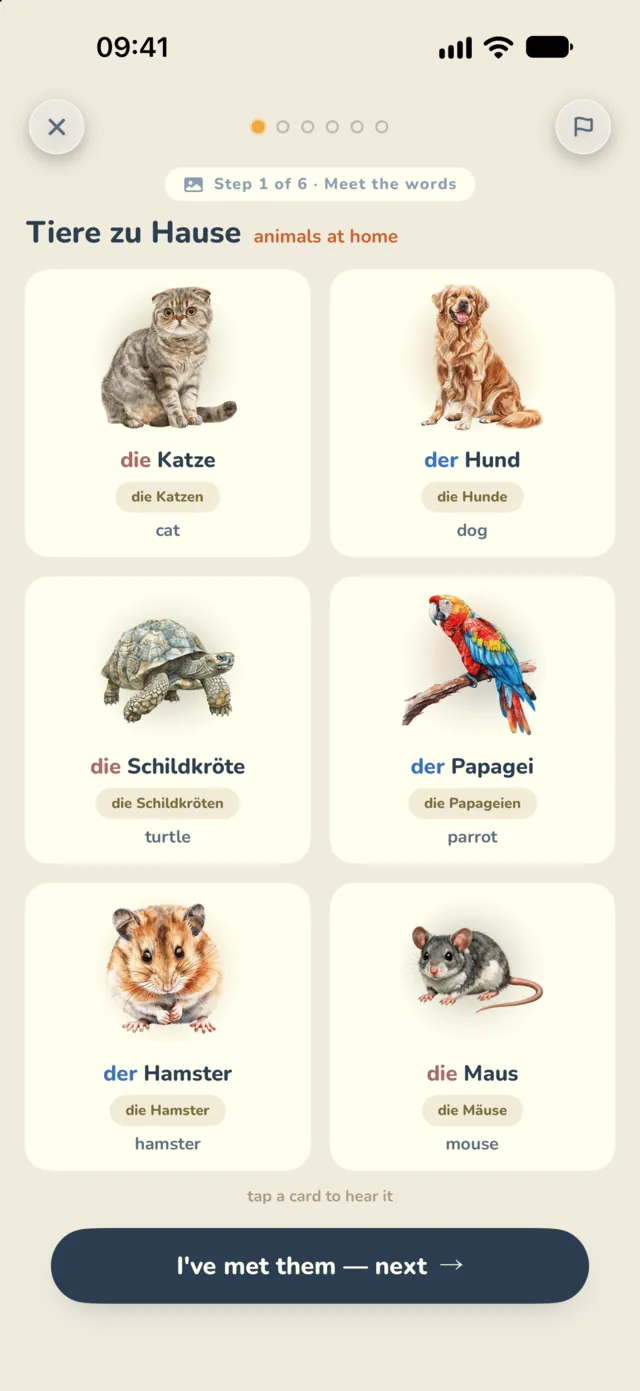
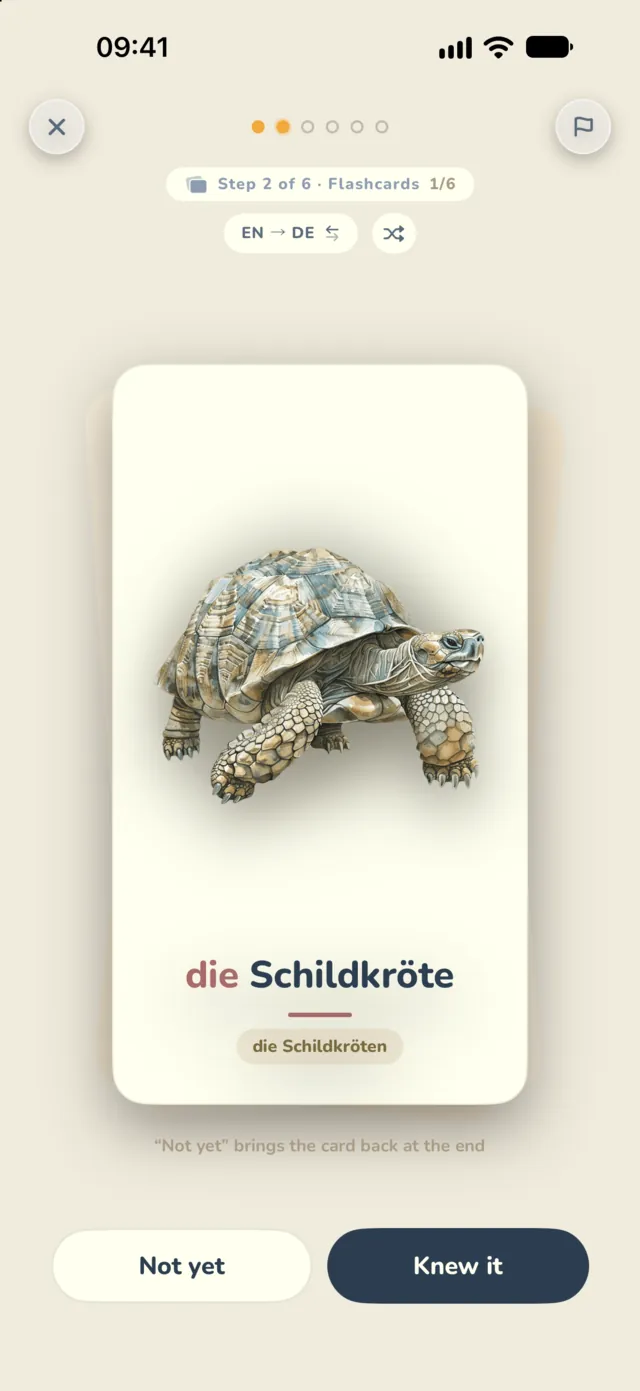
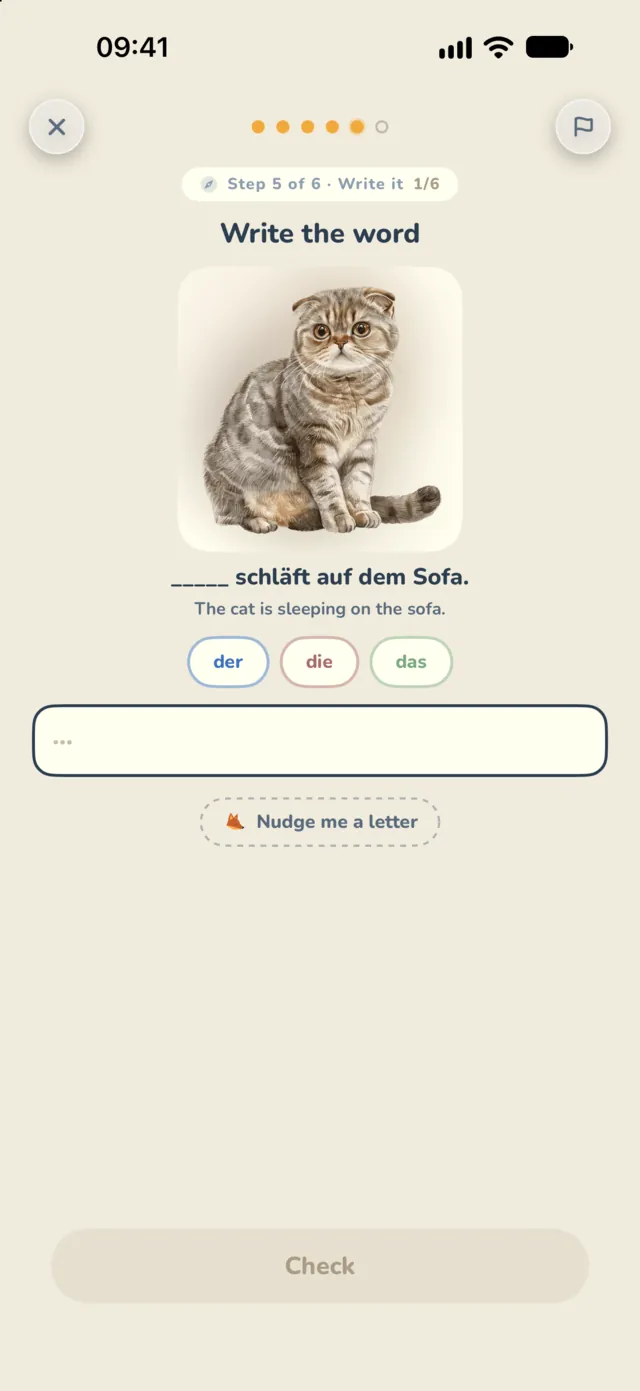
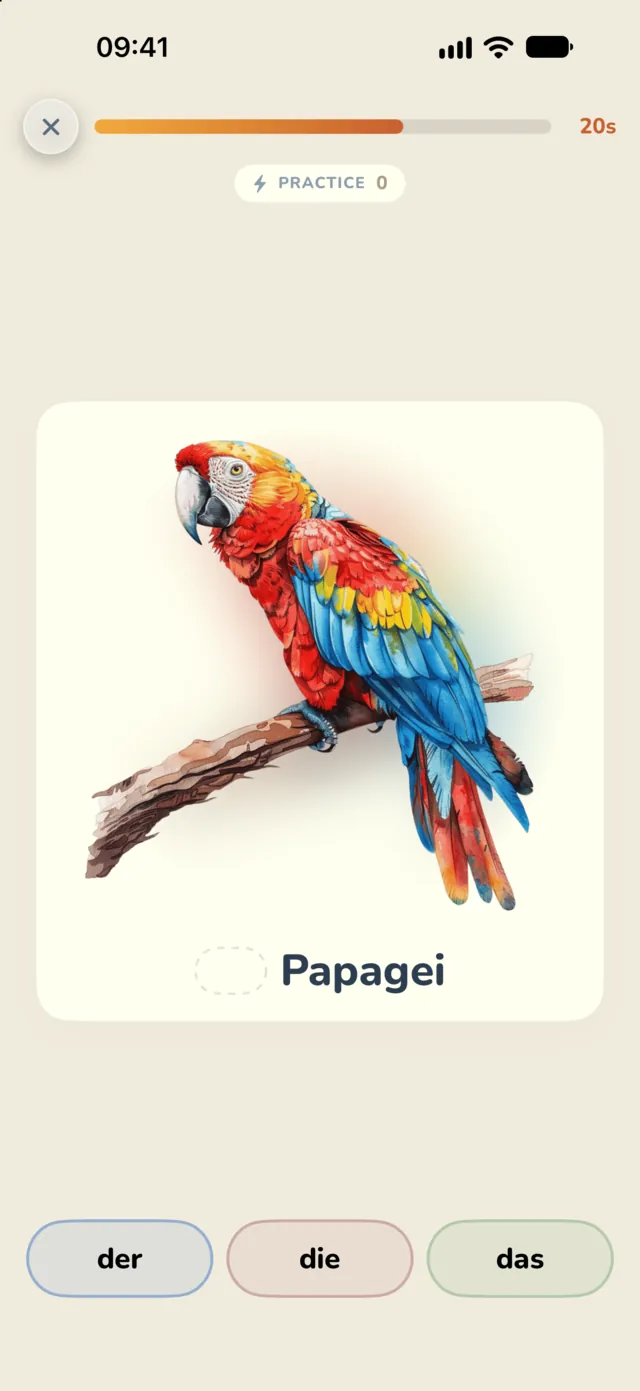
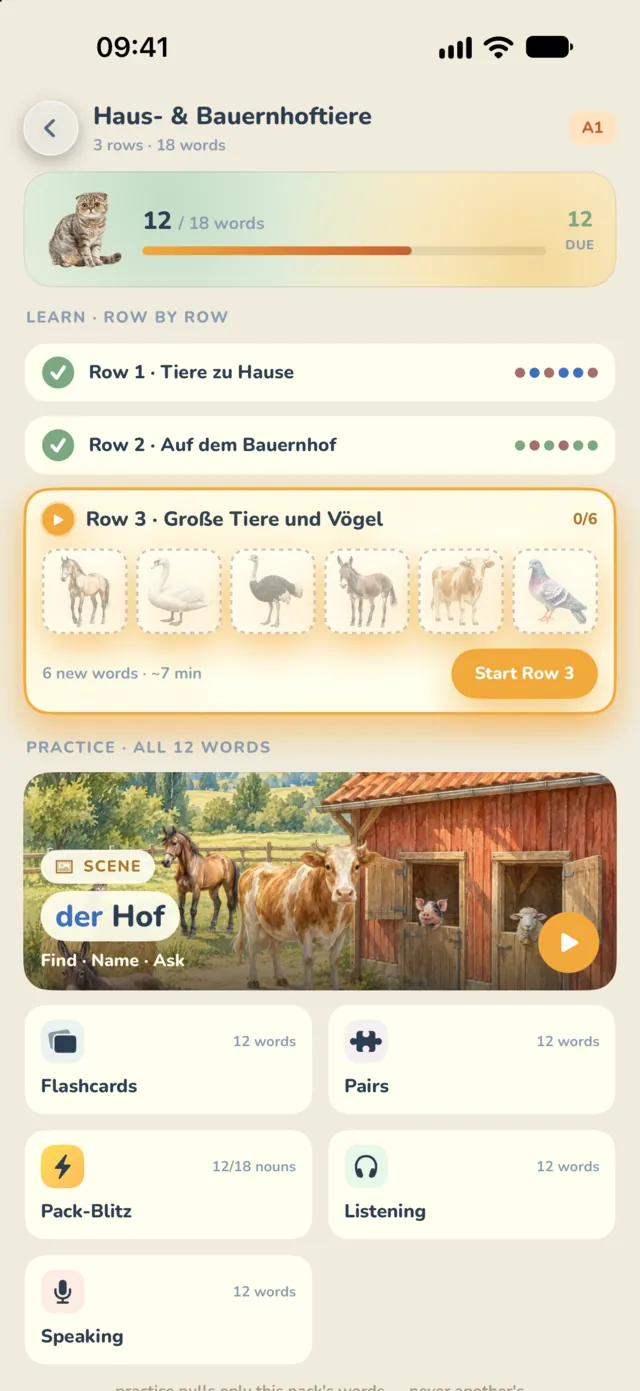
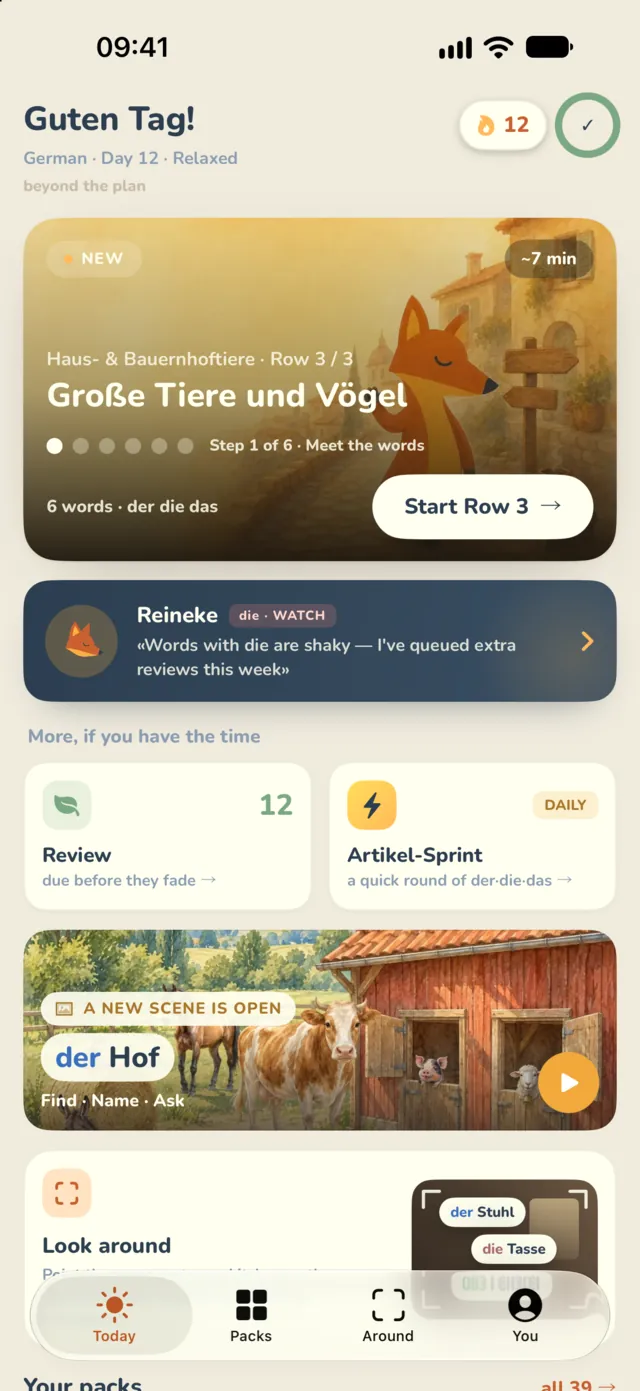
Twenty-eight painted rooms, and every word in them is yours.
Each pack has a place where its words stand: a farmyard, a kitchen, a harbour, a bakery. First you find what you hear, then you name it with its article, then you ask for it in a sentence. Try the farm.
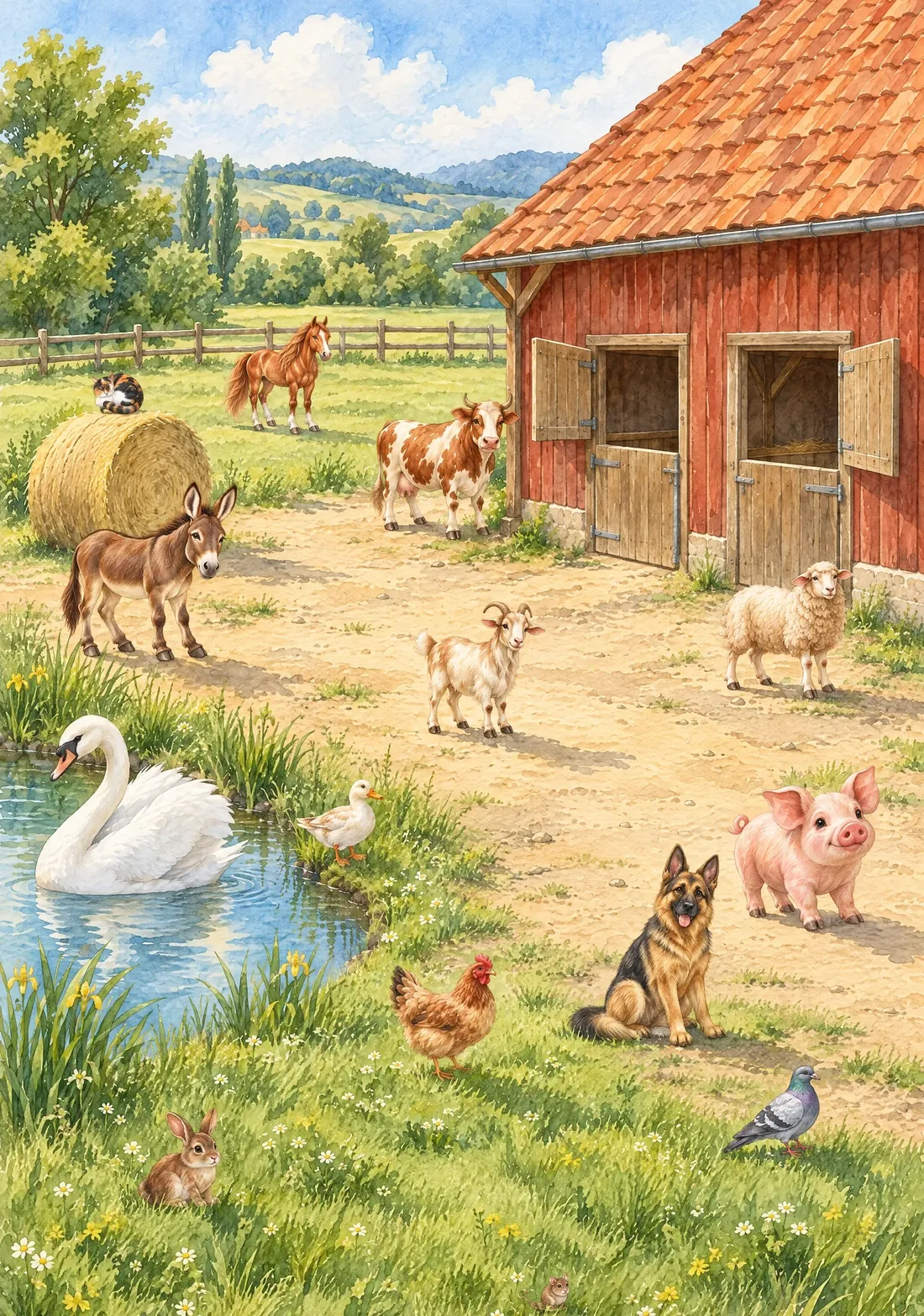
Tap the animal in the painting.
In the app, Find is by ear alone and Name asks for the article. In German, Ask puts it in a sentence — Zeig mir bitte den Esel — where der turns into den and keeps its colour.
Point your phone at the kitchen. It answers in your course.
The camera recognises what is in front of it and names it with the course's own word — article, colour, picture and voice. Hold still and the words land on their things; tap one to hear it.
- Nothing is kept. Frames are read on the device and dropped. No photo is taken, saved or sent.
- Met in real life. Words you have learned are marked when you find them around you — a sighting, not a test.
- Then learn the rest. The words you did not know yet lead straight to their pack, six at a time.
Built for the ten minutes you actually have.
Say it out loud
A speaking lap listens with the recogniser on your own device. Say the word with its article; nothing is recorded or uploaded.
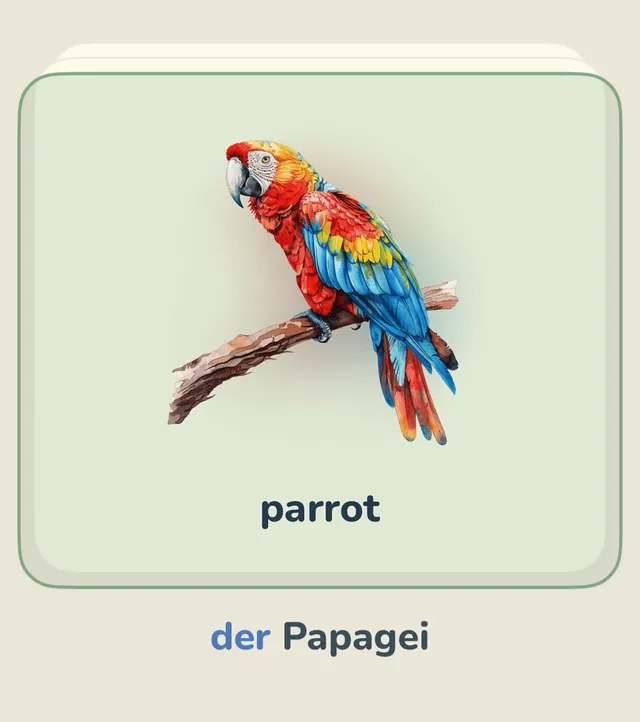
The article sprint
Race the clock on articles. One ranked round a day, and a weekly Game Center league for every course that has them.
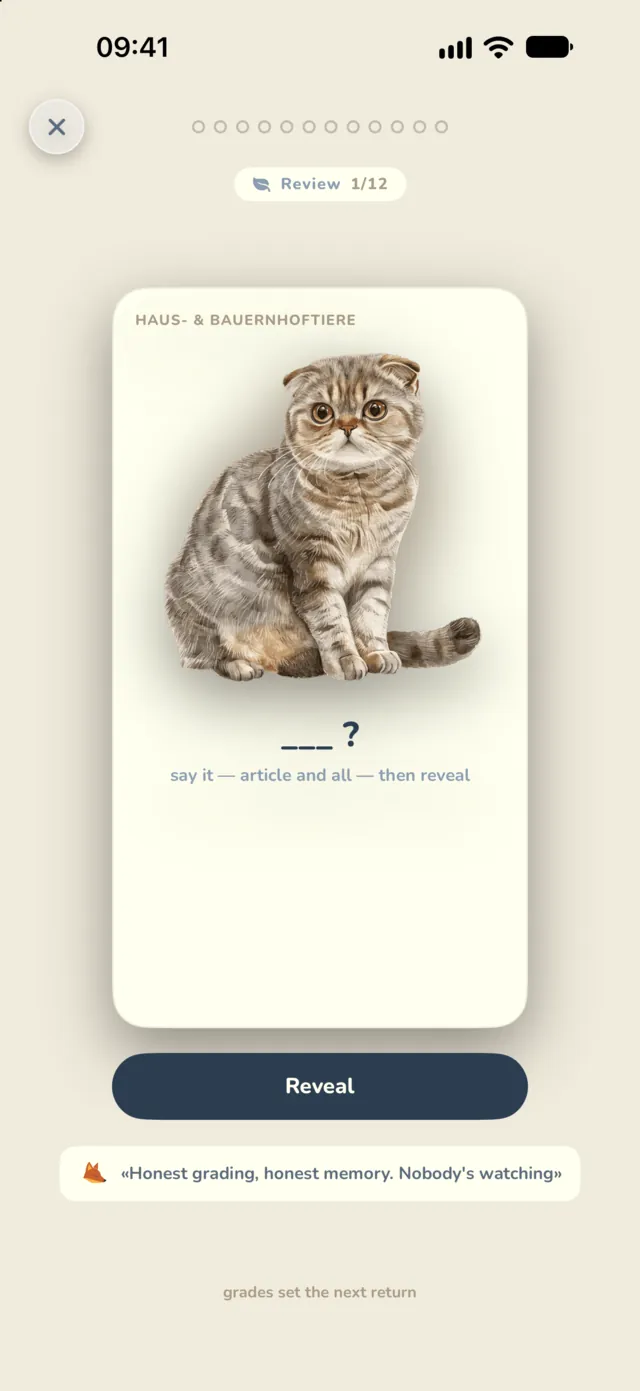
Review, right on time
Every word comes back just before you would lose it. Honest grading, and nobody watching.
A word a day
On the Home Screen and the Lock Screen, with its picture and its colour.

Everywhere you are
Progress travels in your own iCloud. No account to make, nothing to sign in to.
Thirty seconds of it
The course, the camera, the speaking lap, the sprint and a scene — with a score played on the same celesta as the app's own sounds.
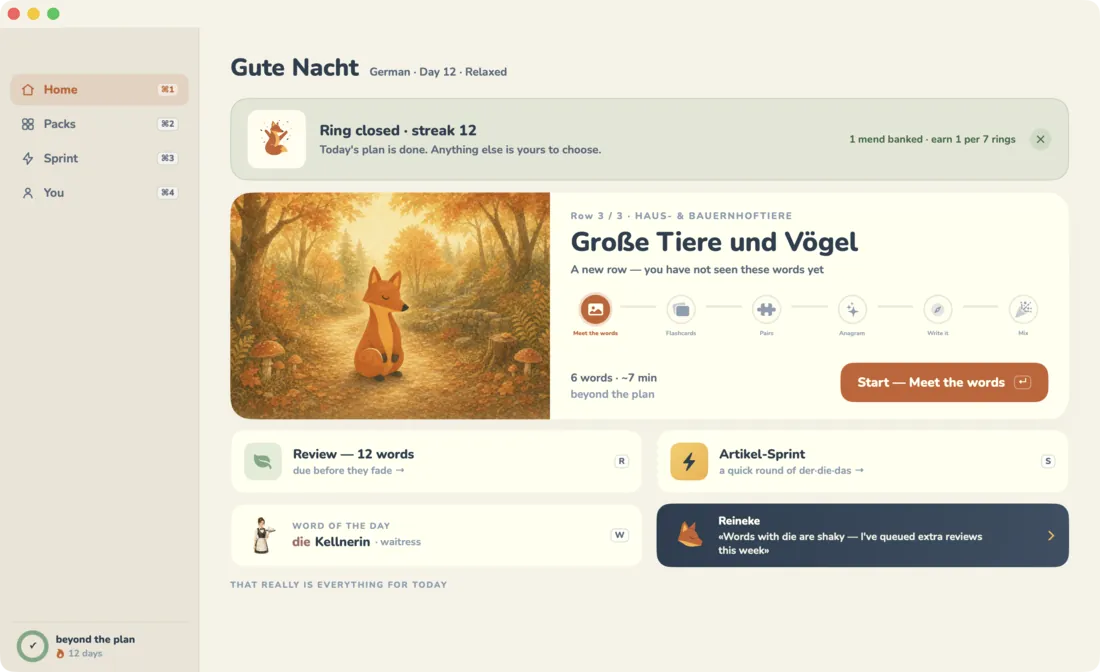
Reineke notices
The fox keeps an eye on what wobbles — “Words with die are shaky — I've queued extra reviews this week” — and says it once.
The same 1,573 pictures, taught in seven languages.
Every course walks the same forty packs, from colours and family to the weather and the stars — each word painted for its meaning and spoken by one consistent voice, checked clip by clip.
Three genders, plurals learned one by one, and countries that carry an article of their own — in der Türkei.
Two genders with los and las in the plural, and every accent the words actually carry.
The indefinite article taught rather than the elided l’, so every noun shows its gender.
Four forms for two genders. The elided l’ hides the gender, so it stays neutral instead of guessing.
European Portuguese, with os and as in the plural — a chávena, not a xícara.
The de words and the het words — exactly the thing nobody can guess.
No gender to learn, so no colours and no sprint — the plurals, the pronunciation and the sentences instead.
The meanings, the sentences and the whole interface — in the language you think in.
- English
- Español
- Français
- Deutsch
- Italiano
- Português
- Nederlands
- Polski
- Русский
- Українська
No account. No ads. Nothing sold.
Six words tonight. Six more tomorrow.
A row takes about seven minutes. The first one is on the house.